
Everyone Agrees Creative Works. Nobody Can Prove It
Creative drives performance, but proving exactly which decisions made the difference is harder. This guide shows how to connect creative quality to...
4 min read

Vidmob Oct 5, 2026, 5:42:56 AM
Most marketing teams have squeezed all the efficiencies they can out of media, harnessing the ability to target and optimize for channel-specific performance in real time. Creative is the one input that still tends to get picked on “gut feeling.”
So maybe it’s no surprise that this is where a huge amount of budget waste happens.
In the retail vertical, competition for in-store visits is fierce: Shoppers visit more than five retailers in an average three-month period, as e-commerce drives double-digit gains in order volume. But most aren’t tapping into creative as a direct performance lever; instead they’re disproportionately focused on channel, audience targeting and other media decisions.
At Vidmob, we’re giving retailers the tools they need to make their creative more measurable and adaptive. Our work with Kroger is an example of that in action: We partnered with the retailer to identify which spend was being wasted on underperforming assets—and which creative choices not only drive ROI in the short-term, but reinforce its brand ethos to Feed the Human Spirit.
Kroger, Vidmob and MMA Global teamed up to measure how AI-powered predictive creative scoring can improve ecommerce performance.
Using Vidmob’s proprietary tech, we analyzed live Kroger campaign data from January 2025 to January 2026, with conversions as the KPI. This included:
872
ads on DV360
1,062
ads on Meta
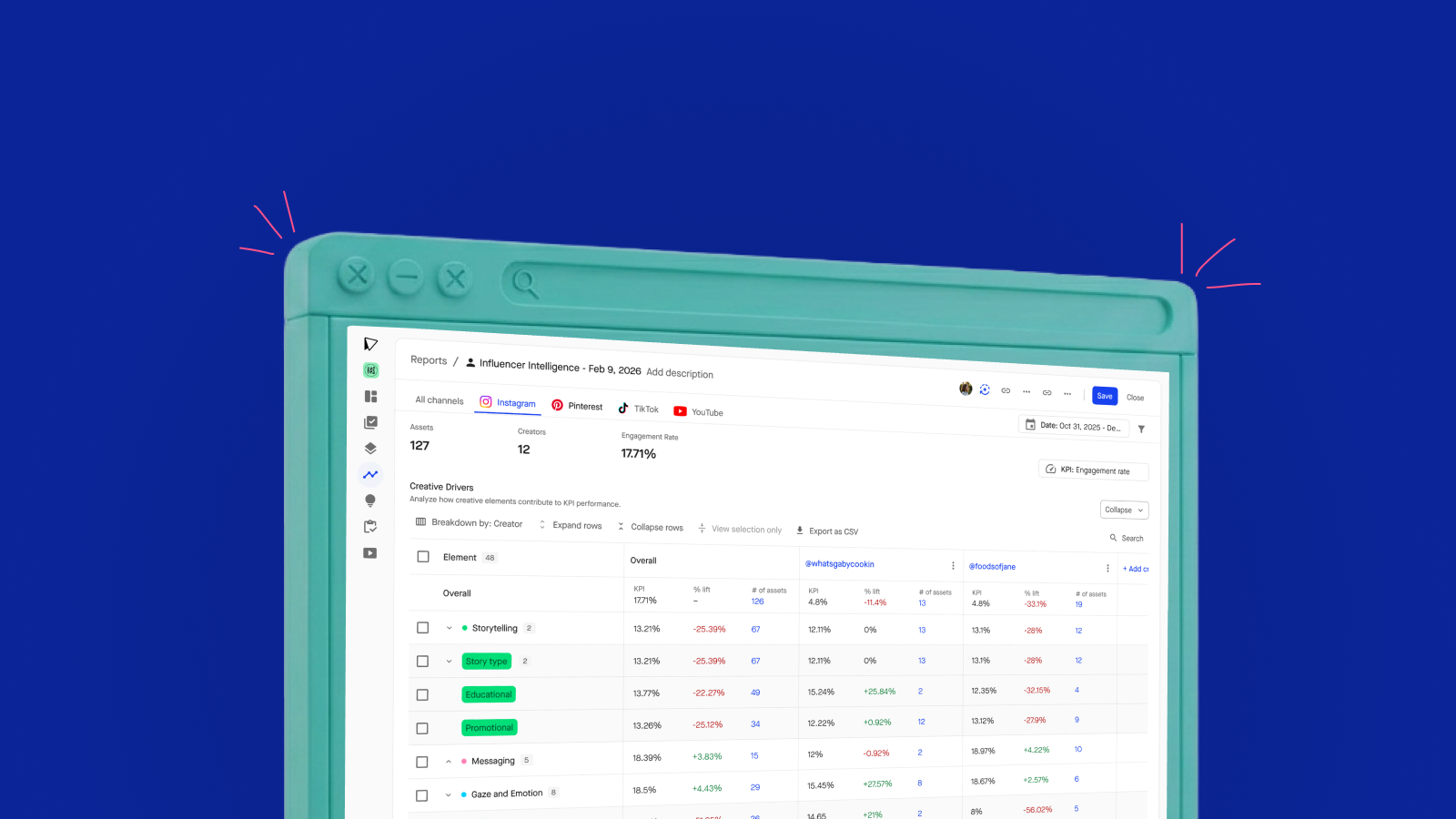
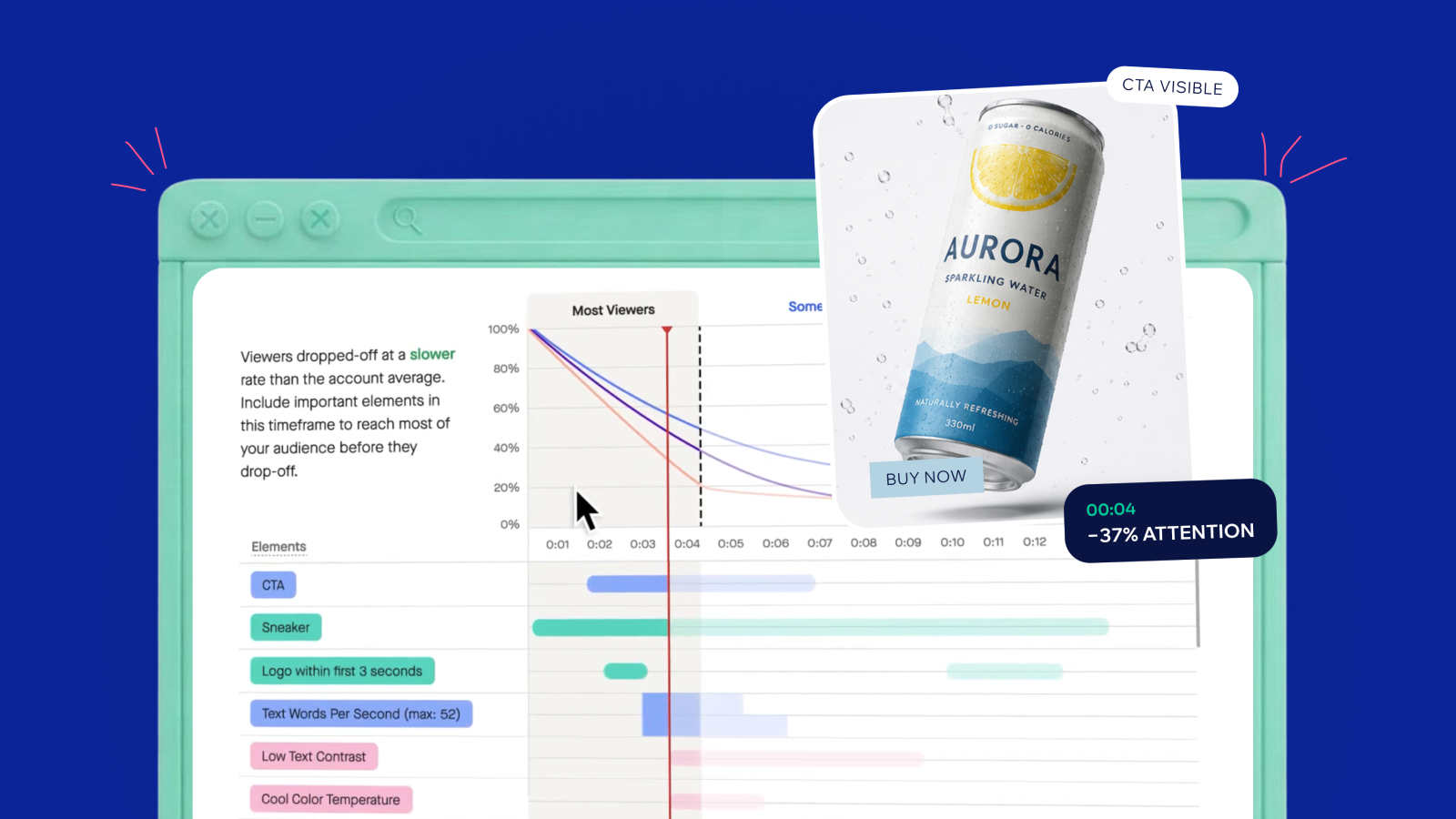
Before we dive in, here’s how Vidmob’s proprietary AI-powered predictive scoring and creative analytics works for companies like Kroger: Vidmob evaluates a marketer’s assets against brand, platform, and performance criteria, linking specific creative attributes with media performance to understand what’s working. We apply historical creative and performance data to inform future decisions, and we structure asset-level information so it can be used across media, production, measurement and the wider marketing stack through APIs and data integrations.
As creative output accelerates, the ability to learn and act quickly becomes more valuable, but only when teams know what deserves to scale.
In Kroger’s case, the analysis was channel-specific to capture the nuances between which messaging converts on different platforms. We scored each asset against 30 creative attributes, from message and emotion to craft and characters, testing to see which drove higher conversions.
Vidmob’s predictive scoring tool analyzed 1,934 pieces of creative from Kroger’s asset library and marked them as either high or low performers. The results were clear: Roughly half of Kroger’s media budget was going to low-performing creative.
The study also uncovered which levers to pull for winning creative:
On DV360, the best-performing creative included persistent calls to action, four or more listed benefits, a sense of urgency, a clear loyalty mechanic, and a clean open with no packshot.
On Meta, ads with people present were above median 82% of the time, compared to only 11% for ads with no people at all.
Across the board, ads built around relatable shopping moments beat out glossy product shots and people shown in transactional moments.
The takeaway: Vidmob’s AI-powered predictive creative scoring can lead to improved e-commerce outcomes without increasing media budget.
To validate the test, we trained the models on 2025 data, then tested them against a separate period in Q1 2026. The results revealed that by adopting AI-powered predictive creative scoring, retailers can accurately forecast which of two assets will drive better e-commerce conversions 81% of the time while driving insights that ground brand building investments in outcomes.
81%
accurately forecast which of two assets will drive better e-commerce conversions
2.2X
By reallocating its existing budget to higher-performing creative, Kroger could grow conversions by up to 2.2X.
The takeaway: The study proves that better ROI is achievable without increasing budget, growing teams, or adding new channels to the mix. Driving performance isn’t about increasing spend, but shifting budget toward assets that are already resonating.
Adjusting existing creative to higher-performing standards is one lever, but what happens when you brief from the start based on proven guidelines?
4X
average improvement in conversion rate across DV360 and Meta
70%
lower costs per conversion
For Kroger, building creative against the guidelines we validated from the start produced a 4X average improvement in conversion rate across DV360 and Meta—at up to 70% lower costs per conversion.
But we didn’t just look at individual assets; we also tied performance back to the retailer’s mission to Feed the Human Spirit. We found that ads built around relatable human moments converted better than ads centered on the product or the transaction. That gives Kroger a clear line from brand building to e-commerce ROI, which makes it easier to defend investment in the brand’s overall promise.
Our study proves that you don’t need a bigger budget to drive better ROI. You just need to identify which existing assets are already winning and shift spend toward them. Better yet, understand which creative guidelines move the needle and brief against those from the start.
The study gives marketers a practical way to get there:
Brief against platform-specific guidelines so creative is aligned from the start
Score new creative before launch and drop the low scorers before investing in media
Run predictive tests with two campaigns and measure against e-commerce ROI
Make scoring an always-on step in campaign development
To drive real efficiencies, bake scoring into your process before campaign launch so teams can catch a low-scoring ad before any media spend is wasted, and use what they learn to sharpen the next brief. Used in conjunction with media mix modeling, which shows which channels drive results, creative scoring can explain why the creative in those channels performed the way it did.
For Kroger, this transformation is well underway. Kroger now builds the above guidelines into every creative brief, scoring new creative before it launches. An in-market forward test will pit high-scoring against low-scoring creative to validate the model's predictions. Over time, Kroger’s analysis will expand to additional platforms and new audiences.
Want to see what this looks like for your brand? We can run the same predictive scoring against your creative library and media spend, and show you which assets are earning their budget and which are not. Get in touch to start.
Book a demo →
Creative drives performance, but proving exactly which decisions made the difference is harder. This guide shows how to connect creative quality to...
A practical seven-question rubric for evaluating creative intelligence platforms, from custom scoring and channel coverage to workflow integration,...
Most creative teams are already testing. The challenge is turning each test into guidance that compounds, diagnoses underperformance, and scales...